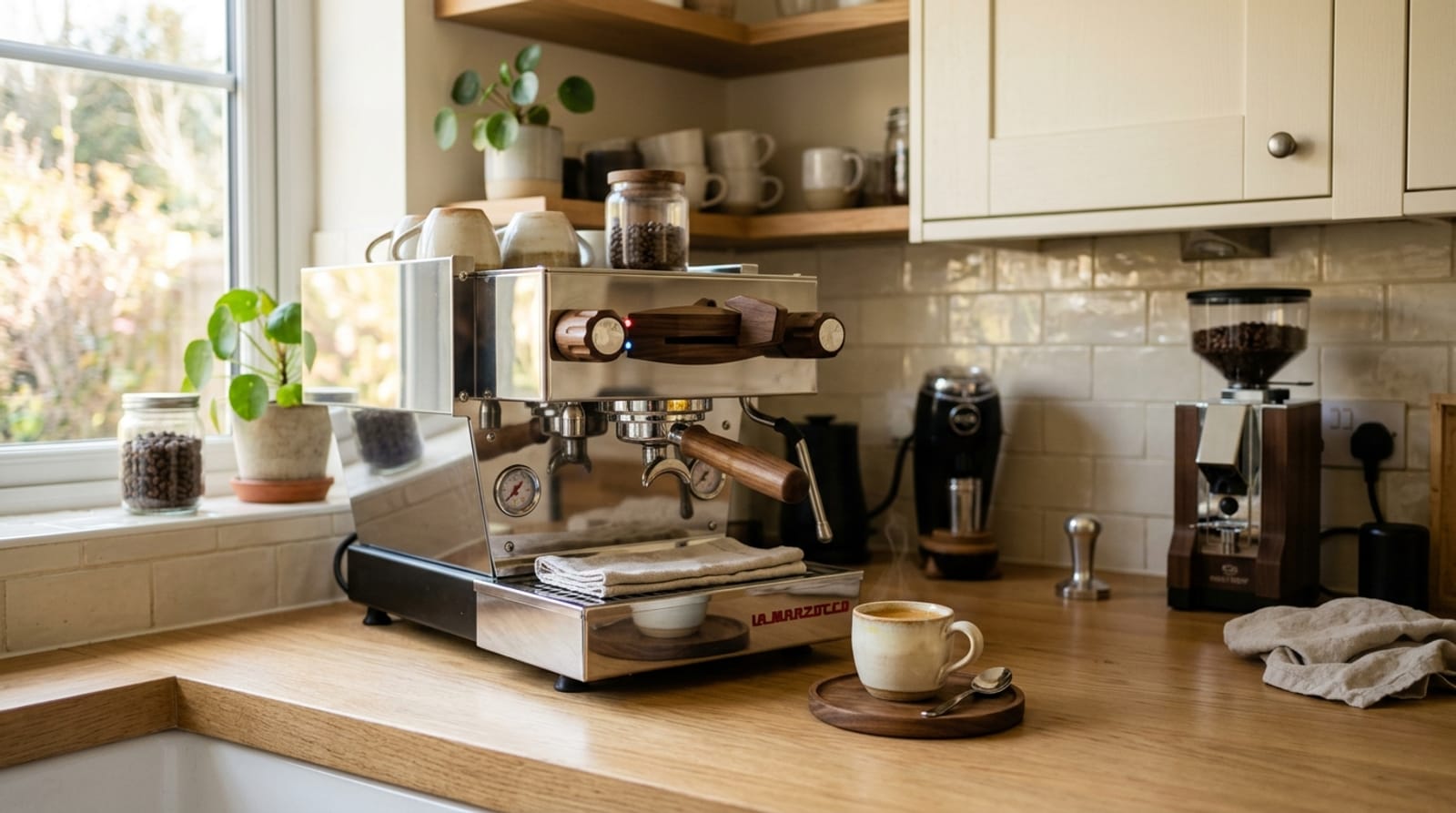
The best espresso machine in 2026 is the Breville Barista Express (typically in the mid-hundreds tier).
It combines a built-in conical burr grinder, PID temperature control, and volumetric dosing into one machine — the ideal setup for beginners and intermediate home baristas.
Best for enthusiasts: Gaggia Classic Pro (also mid-hundreds) with its commercial 58mm portafilter.
Best for convenience: De'Longhi Magnifica Evo (high-hundreds tier) for one-touch, bean-to-cup espresso.
Check current prices on Amazon — they change often.
18–24? Prime for Young Adults is half price, with a 6-month free trial — free fast shipping on the machine, grinder and beans, plus Amazon's easy no-hassle returns. It auto-renews unless you cancel.
Not buying today? Adding it to your cart keeps the price tracked — Amazon flags any change and holds your pick until you're ready.
The Breville Barista Express is the most recommended espresso machine in the world for a reason: it puts everything you need — grinder, tamper, dosing, and extraction — into a single, well-designed machine. The integrated conical burr grinder offers 16 grind settings, letting you dial in the perfect espresso without buying a separate premium-priced grinder.
PID temperature control ensures consistent extraction temperatures shot after shot — the kind of temperature stability the Specialty Coffee Association's brewing and performance standards treat as foundational — a feature usually reserved for machines costing twice as much. The pressure gauge on the front gives you real-time feedback on your extraction, helping beginners learn proper technique quickly. In the mid-hundreds tier, it replaces a budget machine plus a separate grinder, making it genuinely good value.
✓ Pros
Built-in conical burr grinder eliminates need for separate grinder
PID temperature control for consistent extraction
Pressure gauge provides real-time feedback for learning
Volumetric dosing programs repeatable shots
Excellent value: replaces a separate machine and grinder purchase
✗ Cons
54mm portafilter (vs. commercial 58mm standard)
Grinder retention can be noticeable between beans
Large footprint takes significant counter space
Steam, pour, swirl — micro-foam and latte art are within reach at home.
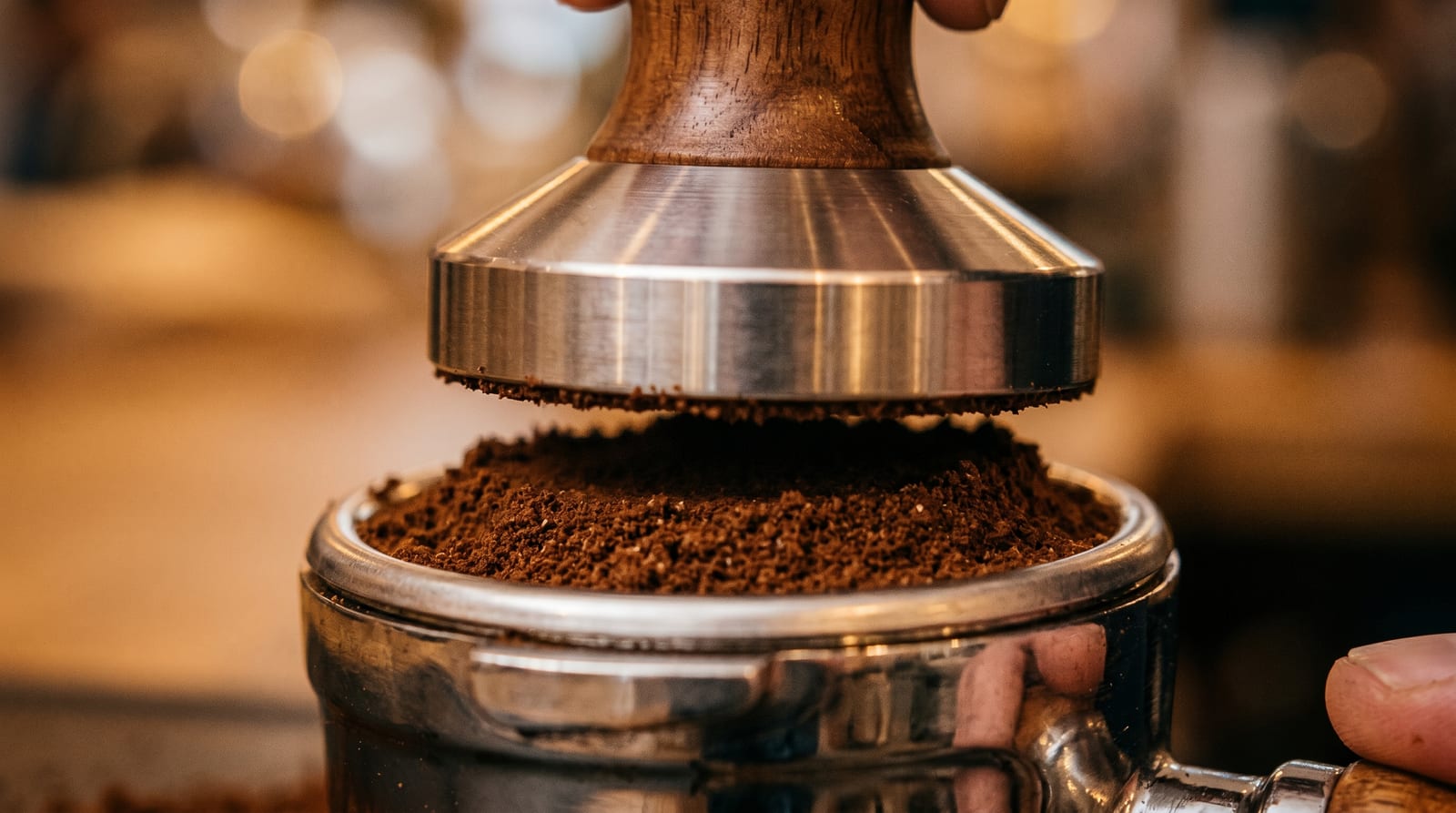
The Gaggia Classic Pro is the machine espresso enthusiasts have been modding, upgrading, and obsessing over for decades. Its commercial-grade 58mm portafilter means you can use the same baskets and accessories as café machines — a huge advantage for upgrading components over time.
Out of the box, it's capable of excellent shots. But the real magic is the modding community: add an inexpensive 9-bar OPV spring, a modestly-priced PID controller, and a quality grinder, and you have a setup that rivals machines costing far more. Made in Italy with industrial-grade components designed to last 15+ years.
The De'Longhi Magnifica Evo is for people who want great espresso without becoming an amateur barista. Press a button and it grinds, tamps, and extracts automatically. The LatteCrema system textures the milk for you — including milk alternatives — and the carafe goes straight back in the fridge between drinks, which is the part that actually saves time on a weekday morning. The Over Ice recipe adjusts the dose and brew so an iced coffee does not arrive watered down.
✓ Pros
One-touch bean-to-cup espresso with no technique required
LatteCrema textures milk automatically, and handles milk alternatives
Milk carafe stores in the fridge between drinks
Seven one-touch recipes including latte macchiato and iced coffee
13 grind settings, and My Latte saves your own recipes
✗ Cons
Costs more than a semi-automatic that makes comparable espresso
Far less control over extraction variables than a semi-auto
Internal brew unit is harder to deep-clean than a portafilter
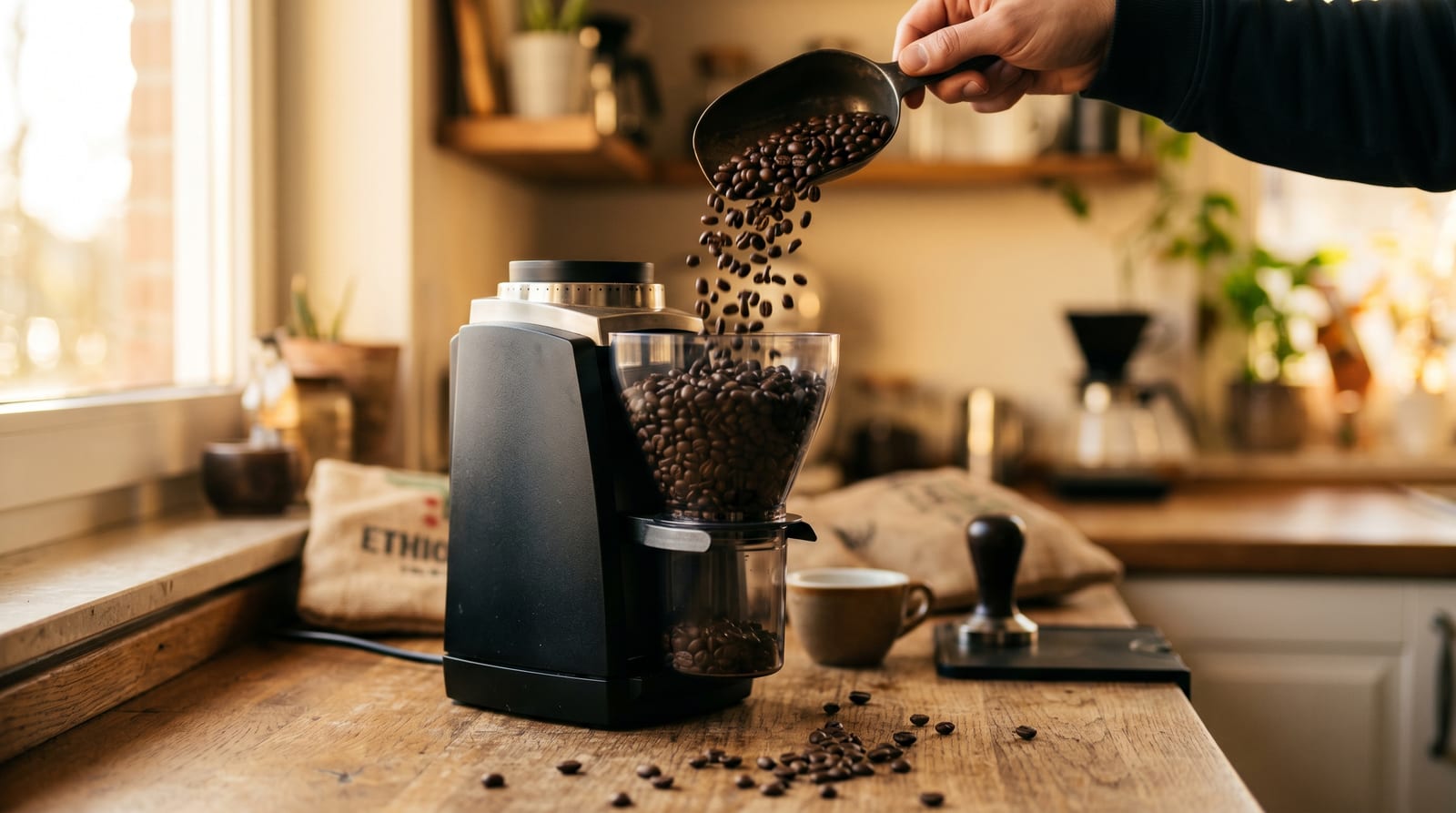
Fresh-ground beans are the single biggest upgrade to your cup.
Best Budget: Breville Bambino Plus
Budget Semi-Auto
Breville Bambino Plus
Budget Tier · 3-Second Heat-Up
Check current price on Amazon
TypeSemi-Automatic
Heat-Up3 seconds (ThermoJet)
Portafilter54mm
MilkAuto steam wand
Pressure15-bar
FootprintCompact
Our verdict: The fast, compact pick — 3-second heat-up and automatic microfoam make it the easiest real-espresso starter.
Not buying today? Adding it to your cart keeps the price tracked — Amazon flags any change and holds your pick until you're ready.
The Breville Bambino Plus heats up in just 3 seconds thanks to ThermoJet technology — the fastest on this list. Its auto steam wand produces microfoam at the push of a button, making it the easiest semi-automatic machine for beginners who want latte art without the learning curve. In the low-to-mid hundreds, pair it with a budget grinder for an excellent starter setup in the mid-hundreds total.
✓ Pros
3-second heat-up — fastest on this list
Auto steam wand creates microfoam automatically
Compact footprint for small kitchens
Excellent entry point for semi-auto
✗ Cons
No built-in grinder (must buy separate)
54mm portafilter limits upgrade path
Smaller water tank than Barista Express
Best Budget Pick: De'Longhi Stilosa
Best Budget
De'Longhi Stilosa
Best Budget · Cheapest Way Into Real Espresso
Check current price on Amazon
TypeSemi-Automatic
GrinderNone (buy separate)
Portafilter51mm
Pump15-bar
HeatingThermoblock
MilkManual steam wand
Our verdict: The budget pick — the cheapest legitimate way into real (non-pod) espresso, if you accept the compromises above.
Not buying today? Adding it to your cart keeps the price tracked — Amazon flags any change and holds your pick until you're ready.
The De'Longhi Stilosa is the cheapest way into real (non-pod) espresso. With a 15-bar pump and a manual steam wand, it lets you pull genuine shots and steam milk for a fraction of the cost of the machines above. It won't match a Barista Express or Gaggia for consistency or upgrade path, but for a curious beginner testing the hobby on a tight budget, it's a legitimate entry point — add a budget grinder and you're making espresso at home for the least money on this list.
✓ Pros
Lowest price on this list — minimal risk to try the hobby
Real 15-bar pump espresso, not pods
Manual steam wand for milk drinks
Tiny footprint
✗ Cons
No grinder — must buy one separately
51mm portafilter limits accessories and upgrades
Thermoblock heating less consistent than PID machines
How to Choose the Right Espresso Machine
Semi-Automatic vs. Super-Automatic
Feature
Semi-Automatic
Super-Automatic
Control
You control grind, dose, tamp, extraction
Machine handles everything
Espresso quality ceiling
Higher — with skill, rivals cafés
Good but limited by automation
Learning curve
Weeks to months
Minutes
Time per drink
2-5 minutes (including grinding/tamping)
60 seconds (push button)
Price range
Budget to mid-hundreds
Mid-hundreds to premium (four figures)
Best for
Hobbyists, coffee enthusiasts
Busy households, convenience lovers
What to look for
Portafilter size: 58mm (commercial standard) is best for upgrades. 54mm (Breville) is proprietary. 51mm (budget) limits quality.
Heating system: PID-controlled = most consistent. Thermojet = fastest. Thermoblock = most common budget option.
Grinder: A quality grinder matters MORE than the machine. Budget the low-to-mid hundreds if your machine doesn't include one.
The Breville Barista Express (typically in the mid-hundreds) is the best espresso machine for beginners. It includes a built-in conical burr grinder, PID temperature control, and volumetric shot programming — everything you need in one machine. No separate grinder purchase required. Check the current price on Amazon, as it changes often.
Semi-automatic (like the Breville Barista Express or Gaggia Classic Pro) gives you control over grind size, tamping, and extraction — producing better espresso with practice. Super-automatic (like the De'Longhi Magnifica Evo) does everything at the push of a button — perfect for convenience but less customizable.
It depends on the machine. The Breville Barista Express and De'Longhi Magnifica Evo have built-in grinders. The Gaggia Classic Pro does NOT include a grinder — you'll need to buy one separately (budget the low-hundreds for a quality burr grinder). A good grinder is arguably more important than the machine itself.
Budget machines (the low hundreds) like the De'Longhi Stilosa make drinkable espresso. Mid-range (the mid-hundreds tier) like the Breville Barista Express or Gaggia Classic Pro produce café-quality shots. Super-automatics like the De'Longhi Magnifica Evo (high-hundreds tier) offer maximum automation, trading extraction control for one-touch convenience. Prices shift often, so check the live price on Amazon.
Yes — the Gaggia Classic Pro (typically in the mid-hundreds) is considered the gold standard prosumer espresso machine. It uses a commercial-grade 58mm portafilter, has a massive modding community, and with proper technique produces shots that rival machines costing 3x more. Budget extra on top for a quality grinder.
🏢 Buying for a Business?
Putting an espresso machine in an office or shop? An Amazon Business account is free for companies, schools and nonprofits — business pricing, tax-exempt purchasing, and multi-user approvals on machines and supplies. If you're buying personally, you don't need it.
Best Espresso Machine Under $500 — Bambino Plus for most people, Gaggia Classic Pro if espresso is the hobby, and why neither includes a grinder.
Best Espresso Machine Under $1,000: Barista Express for most people, Magnifica Evo for one-touch convenience, Gaggia plus a real grinder if espresso is the hobby, and why a dual boiler sits one tier up.
The Heat-Up Index — heating architecture, manufacturer-stated heat-up times, PID, and portafilter size for every machine we cover, in one sourced table.
Best Coffee Setups for Dorm Rooms — what housing rules usually allow, from pod machines to appliance-free cold brew, and the student Prime deal.
Gifts for Espresso Lovers — the precision tools enthusiasts postpone buying for themselves, not another machine.
This guide draws from manufacturer specifications, current Amazon listings, the National Coffee Association's 2026 National Coffee Data Trends report, Specialty Coffee Association brewing standards, Jonathan Gagné's Coffee ad Astra research, reviews from James Hoffmann, Whole Latte Love, Seattle Coffee Gear, and community feedback from Reddit r/espresso and r/coffee. Prices change frequently — always check the live price on Amazon via the links above.
Last reviewed: May 28, 2026. Lifestyle imagery is illustrative.